Poor air quality can have health impacts. People with heart or lung disease, older adults, and children are most at risk, but everyone can take steps to reduce exposure to poor air quality.
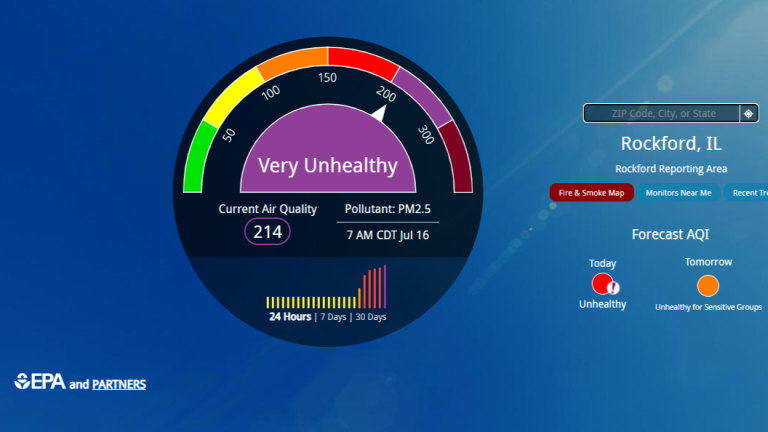
The Illinois Environmental Protection Agency in partnership with the United States Environmental Protection Agency monitor air quality. You can monitor the air quality on the AIRNOW website.
Be aware of AIR QUALITY concerns and take the following steps to reduce your exposure:
- Monitor air quality at AIRNOW
- When air quality is “unhealthy or hazardous”, reduce exposure by:
- Reducing the amount of time outdoors and avoiding strenuous outdoor activities
- Staying indoors with windows closed and use an air conditioner with a hepa filter
- Avoid other indoor and outdoor irritants such as burning candles, fire pits, fireplaces
- If you work outdoors, consider masking to protect your lungs
- Manage existing health conditions such as diabetes, high blood pressure, lung, and heart disease
Short-Term Health Effects of Exposure to Air Pollutants:
- Coughing
- Trouble breathing normally
- Stinging or watery eyes
- Scratchy throat
- Runny nose
- Irritated sinuses
- Wheezing or shortness of breath
- Chest pain
- Headaches
- Asthma attacks
- Fatigue/tiredness
- Fast heartbeat
- Worsening of chronic heart and lung diseases
Long-Term Health Effects of Exposure to Air Pollutants:
- Premature death in individuals who have chronic heart or lung diseases
- Reduced lung function growth in children